
"German roasting equipment"
200 article(s) found

The history of Merita filter cup what kind of coffee beans does Merita fit for Starbucks hand flushing equipment?
Professional coffee knowledge exchange more coffee bean information please follow the coffee workshop (Wechat official account cafe_style) in the current curry market popularity and acceptance of espresso. However, the rise of the boutique coffee market has undoubtedly led to a shift in public attention to a more diversified way of brewing coffee. Among them, the most important thing that can not be ignored is the emergence of coffee culture.

The way coffee is made, how to use coffee equipment.
Equipment usage drip coffee brewing method invented by the Germans. To put it simply, after grinding the coffee, put it in a funnel or add a layer of filter paper and pour hot water on top (the ideal water temperature is between 90C and 95C). Due to the gravity of the earth, the coffee will flow out from below. The amount of coffee is usually 7 to 10 grams of powder can make about a cup of 120ml. Siphon pot (Syphon) siphon
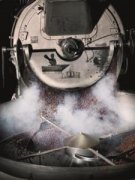
Introduction of roaster roaster is mainly divided into four categories
The roaster is mainly divided into four types: direct fire type, semi-hot air direct fire type, hot air type and electric type. 1. Direct fire is the earliest baking tool, that is, the raw beans are roasted by fire and then transferred to the drum. The built-in motor keeps running the drum and stirring the coffee beans in the drum, trying to make each coffee bean come into contact with the hot iron evenly to achieve the goal of balanced roasting.
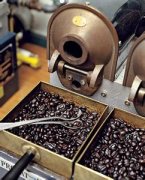
Introduction of roaster Coffee bean roaster is mainly divided into four categories
The roaster is mainly divided into four types: direct fire type, semi-hot air direct fire type, hot air type and electric type. 1. Direct fire is the earliest baking tool, that is, the raw beans are roasted by fire and then transferred to the drum. The built-in motor keeps running the drum and stirring the coffee beans in the drum, trying to make each coffee bean come into contact with the hot iron evenly to achieve the goal of balanced roasting.

Coffee Roasting Equipment Type and Degree of Roasting
Coffee Roasting Coffee is popular mainly because of the aroma formed after roasting and the taste when drinking. Coffee beans themselves do not have any special taste, is roasted to completely transform and reorganize the internal substances of the beans, forming a new structure, thus bringing out the flavor of coffee. Baking tools Baking machine, divided into 3 categories: direct fire, semi-hot air direct
Classification and Taste characteristics of Ecuadorian Coffee beans introduction to Flavor description treatment of varieties in producing areas
The unique roasting technology Bravo coffee R & D team has been invited by the Ministry of Labor and Social Security to compile the "Barista Professional Standard textbook". The R & D team keeps abreast of the latest information and technology of the international coffee industry and constantly exchanges and interacts with our domestic counterparts, ensuring our R & D and technological advantages. Bravo Coffee production Department introduces the most advanced Italian Pet in the world.

Flavor description of hand-made Ecuadorian Coffee introduction of Grinding Calibration by Taste treatment
Bravo Coffee Research and Development team has been invited by the Ministry of Labor and Social Security to compile the "textbook on Professional Standards for baristas". The R & D team keeps abreast of the latest information and technology of the international coffee industry and constantly exchanges and interacts with our domestic counterparts, ensuring our R & D and technical advantages. Bravo

Introduction to the sour Kilimanjaro coffee boutique coffee bean flavor manor in Tanzania
In 1886, Tanganyika Inland was placed under the German sphere of influence. In November 1917, British forces occupied the whole territory of Tanganyika. In 1920, Tanganyika became a British mandate. In 1946, the United Nations General Assembly adopted a resolution to change it into a British trust. On May 1, 1961, Tanzania achieved internal autonomy. On December 9 of the same year, independence was declared, and the Republic of Tanganyika was established a year later. Zanzibar became a British guarantor in 1890

Make your own coffee? Gas stove + + hand net to bake coffee, save 300000!
Yes, today let's take a look at how to bake a pot of freshly baked coffee at home. Coffee roasting is the most complex link in coffee making, and the expensive roaster is an insurmountable gap for most coffee lovers. Take the German PROBAT of Little Aijia's 12KG, for example, the price has reached 30W + SoftGirl. Figure 1: specialties with a large price of 30W +

How about Yunnan Coffee Factory? how many Yunnan Coffee factories are there?
"Yunnan Coffee Factory official website" professional coffee knowledge exchange more coffee bean information please follow coffee workshop (Wechat official account cafe_style) Yunnan Coffee Factory is located in Chuncheng-Kunming, is the United Nations Development Program (UNDP) and the Chinese government project funding, completed and put into production in 1992, the annual single-shift production of roasted coffee 1000 tons, is the current domestic equipment technology

Bobart industrial coffee roaster Probat G120 Coffee Roaster
* type Probat industrial coffee roaster * * Roaster, model type Probat G120Universe 1 * Burberry coffee roaster has an hourly baking capacity of about 480kg, and its roasting capacity per batch is 120kg. It is suitable for roasting coffee in the time range of 8-20 minutes. Similarly, it can bake a range of 80-120 kg of coffee. In this case, the baking time may vary.

Galapagos Coffee single Bean Flavor description Variety planting Development History of production area treatment
Ecuador Ecuadorian population: 15224000 Ecuadorian coffee is increasingly prominent in the boutique coffee industry, and although low-lying areas are unlikely to produce good coffee, higher elevations have great potential. GALAPAGOS Galapagos Islands GALAPAGOS produces a small amount of coffee in the Galapagos Islands, where supporters claim that the climate model

How to choose a commercial coffee bean roaster _ how to store commercial coffee beans _ how to buy commercial coffee beans
Professional coffee knowledge exchange more coffee bean information please pay attention to the coffee workshop (Wechat official account cafe_style) how to choose a suitable commercial coffee bean roaster now there are a wide variety of coffee roasters on the market, each has its own advantages. However, there is always a standard to judge whether a coffee roaster is suitable or not. 1 graceful baking and simple operation

Coffee hand-made BentzMelitta
For the exchange of professional baristas, please follow the coffee workshop (Wechat official account cafe_style). We should thank BentzMelitta, a German housewife. This brewing method was first invented by Ms. Melita in Germany at the beginning of the 20th century. When you walk into the cafe, the barista kindly asks you if you want to drink Italian or hand flush? He looked up at the food.

The consumption of coffee also needs to be upgraded. Never Coffee bottles the boutique coffee.
The bottled coffee market in Japan is very large. Bottled coffee sells better than any bottled drink in the market, and the technology is more mature. In China, only a few established beverage manufacturers are involved in this field, and the growth rate of the bottled beverage market is less than 10%, but the annual growth rate of instant coffee can reach 30%, which is a fast-growing category. Never Coffee has been bottled since 2015.

Share the story of Huang Wei, a famous Chinese coffee roaster.
As an imported product from the West, it is not easy for coffee to give birth to a coffee master in China. Our protagonist today is Huang Wei, who learned cocoa processing technology and coffee roasting equipment and production technology during his participation in the construction of a cocoa processing plant assisted by China in Ghana in Africa. After returning to China in 2001, due to work related to Chinese coffee growers in Yunnan, and so on.

Introduction of coffee production equipment and requirements. What kind of instant coffee production equipment are needed?
Professional coffee knowledge exchange more coffee bean information please pay attention to coffee workshop (Wechat official account cafe_style) equipment and facilities Article 8 Water supply and drainage, cleaning and disinfection, waste storage, lighting and inspection facilities shall comply with the relevant provisions of equipment and facilities in the General principles for examination of Food production permits. Equipment for monitoring, control, and recording, such as pressure gauges, thermometers, recorders, etc.

The popularity list of 7 kinds of instant coffee recommends [the latest version in 2019] how to make instant coffee
Professional coffee knowledge exchange more coffee bean information Please pay attention to the coffee workshop (Wechat official account cafe_style) when you want to drink coffee, casually pour in instant coffee powder, add hot water, you can immediately enjoy the aroma and aroma of coffee, it is really a very convenient thing. You don't have to go out to the coffee shop to wait, and you don't have to spend time preparing equipment for making coffee; instant coffee powder.

Observation on the rise of domestic roaster at Shanghai International Hotel supplies Exhibition
At this year's Shanghai International Hotel supplies Exhibition, there are two trends worth paying attention to. One is that the heat of coffee roasting has increased year by year, and this year has ushered in an outbreak, and the other is the sudden rise of domestic roasters. First of all, we are concerned that most coffee equipment manufacturers and high-end raw bean manufacturers show off their own coffee roasters, which was rare three years ago. Secondly, the country

Villa Rica Peru Introduction Villa Rica Coffee House's unique culture and flavor
Coffee growing areas in Peru are mainly located in the central Chanchamayo region, and the two most famous growing areas in this region are Villa Rica and La Merced, with Typica Arabica as the main planting variety. The history of coffee cultivation in Peru can be traced back to 1930, when a group of German immigrants settled in the present Villa Rica region and started coffee planting economic activities.